> For the complete documentation index, see [llms.txt](https://docs.spike.sh/llms.txt). Markdown versions of documentation pages are available by appending `.md` to page URLs; this page is available as [Markdown](https://docs.spike.sh/status-pages/live-status-widget.md).
# Live status widget
Embed a live status widget on your website so every visitor can check your system's real-time health at a glance.
The live status widget displays your system's current health directly on your website. Paste the code snippet into any page: footer, contact page, support docs, header dropdown, or sidebar.
## Status priority order
The widget shows the highest-priority status across all your components:
1. Planned Maintenance
2. Critical Outage
3. Partial Outage
4. Degraded Performance
5. Operational
For example, if components A, B, and C are in *Degraded Performance* and component D is in *Critical Outage*, the widget shows *Critical Outage*.
## Customisation
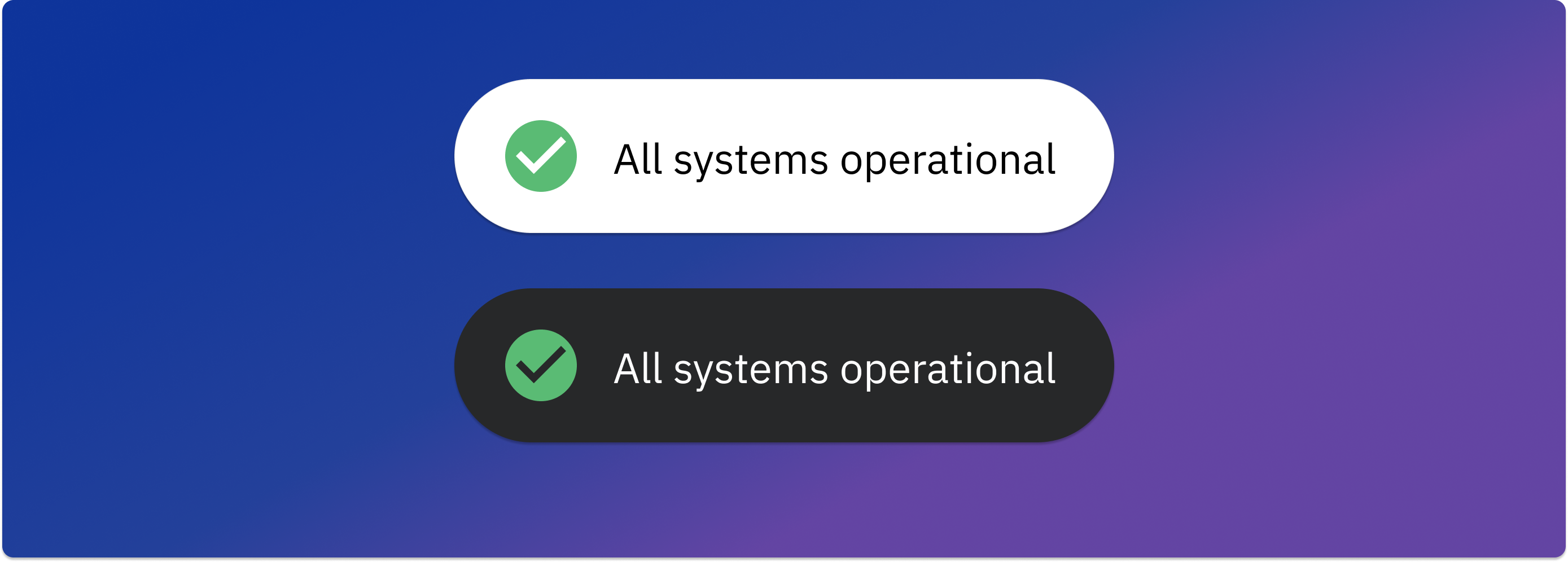
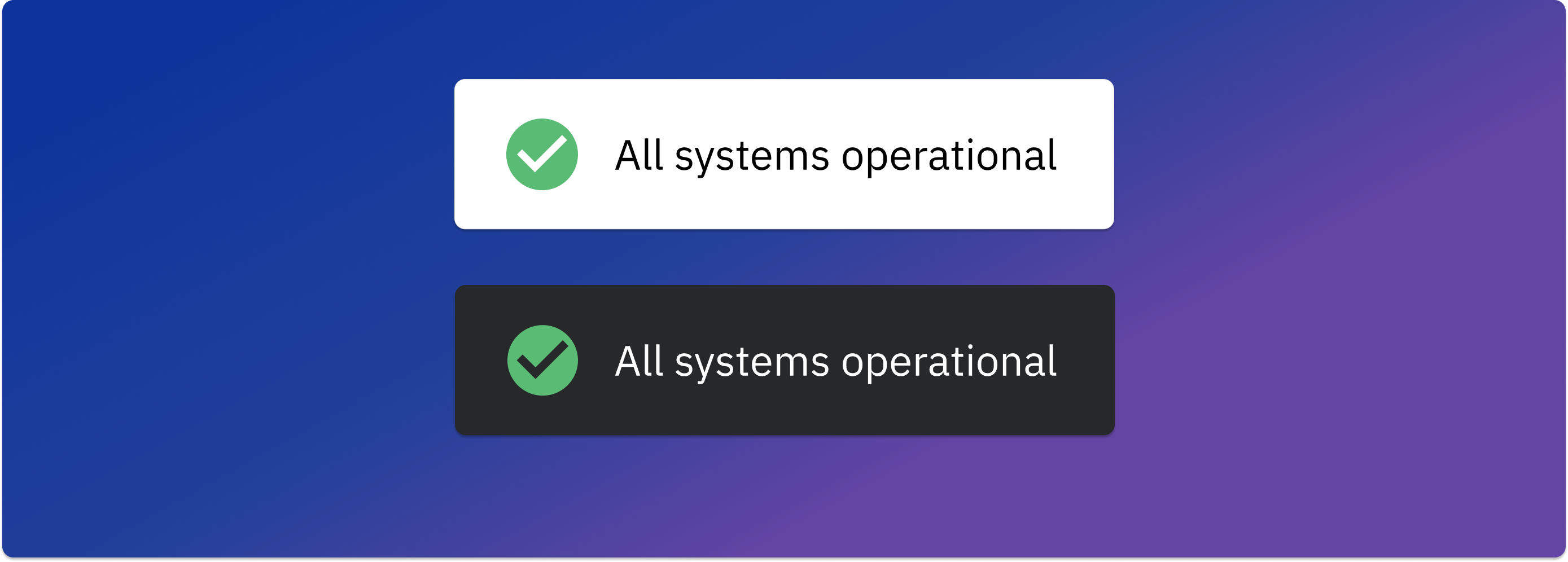
Spike supports Light, Dark, and System themes out of the box. You can override Spike's default CSS to modify the look and feel. All HTML classes use the **`spike--`** prefix.
### How to enable
1. Visit your status page dashboard at
2. Navigate to **Widget** from the sidebar
3. Enable **Embed Live Status Page Widget**
4. Click **Get code** and paste it in your `` tag
You can initialise the widget with configuration options:
```javascript
```
{% hint style="info" %}
Adjust the loading and initialisation to fit your frontend stack.
{% endhint %}
{% tabs %}
{% tab title="Large rounded corners" %}
{% endtab %}
{% tab title="Small rounded corners" %}
{% endtab %}
{% endtabs %}
## Security
Add your domains to the allowlist so the widget loads correctly. Use `*.example.com` to allow all subdomains. For local testing, add your testing domain (such as an [ngrok](https://ngrok.com) URL) to the allowlist temporarily.

 4. Click **Get code** and paste it in your `` tag
You can initialise the widget with configuration options:
```javascript
```
{% hint style="info" %}
Adjust the loading and initialisation to fit your frontend stack.
{% endhint %}
{% tabs %}
{% tab title="Large rounded corners" %}
4. Click **Get code** and paste it in your `` tag
You can initialise the widget with configuration options:
```javascript
```
{% hint style="info" %}
Adjust the loading and initialisation to fit your frontend stack.
{% endhint %}
{% tabs %}
{% tab title="Large rounded corners" %}