> For the complete documentation index, see [llms.txt](https://docs.spike.sh/llms.txt). Markdown versions of documentation pages are available by appending `.md` to page URLs; this page is available as [Markdown](https://docs.spike.sh/escalations/how-to-create-an-escalation-policy.md).
# How to create an escalation policy
Step-by-step guide to creating an escalation policy in Spike to define who gets alerted, and when, during an incident.
{% hint style="info" %}
Not sure where to start? Spike offers [escalation policy templates](https://spike.sh/templates/escalation-templates) with pre-built configurations.
{% endhint %}
{% stepper %}
{% step %}
### Go to Escalations
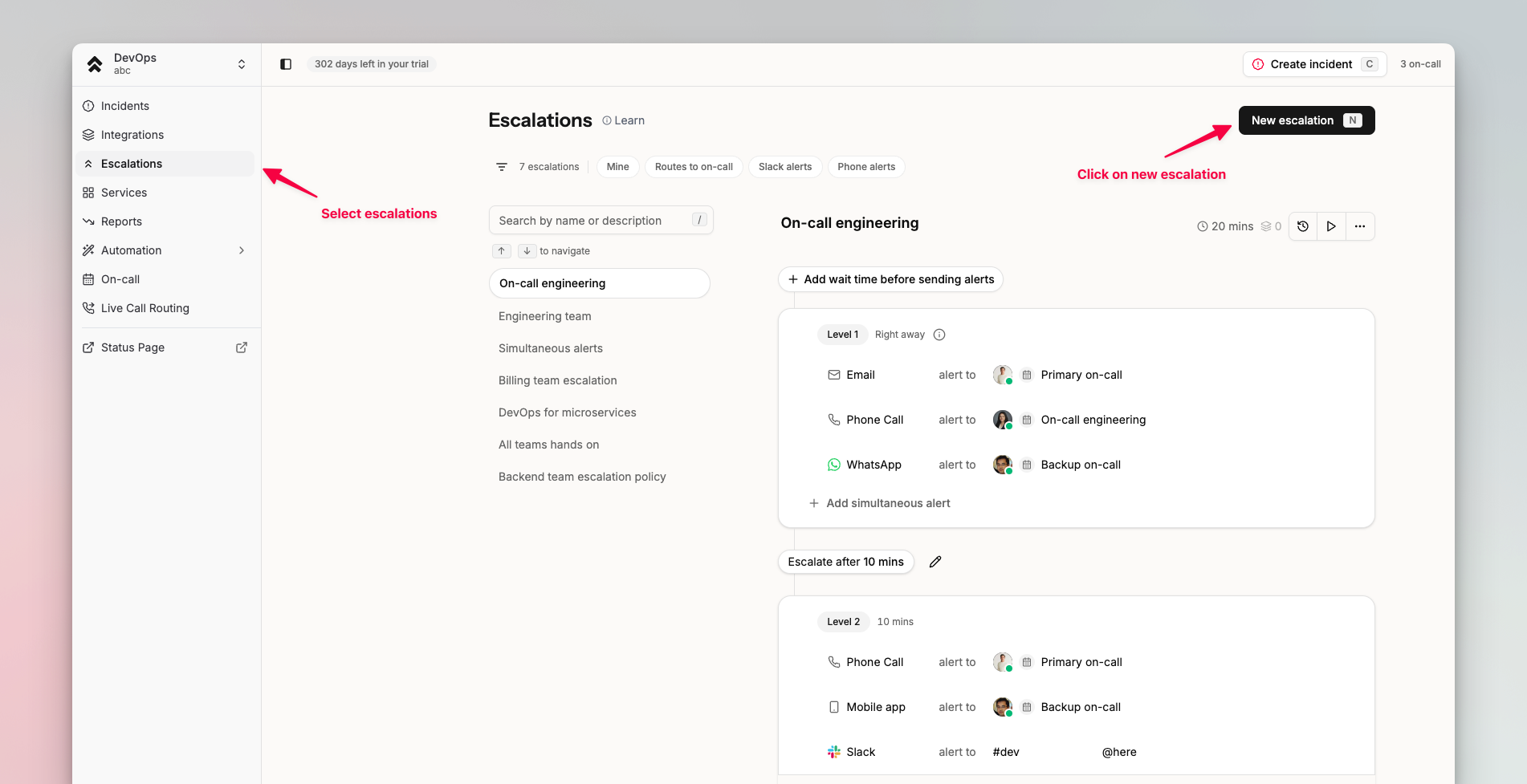
Navigate to the [Escalations section](https://app.spike.sh/escalations) on the dashboard and click **New escalation**.
Select Escalations from the sidebar.
{% endstep %}
{% step %}
### Configure the policy
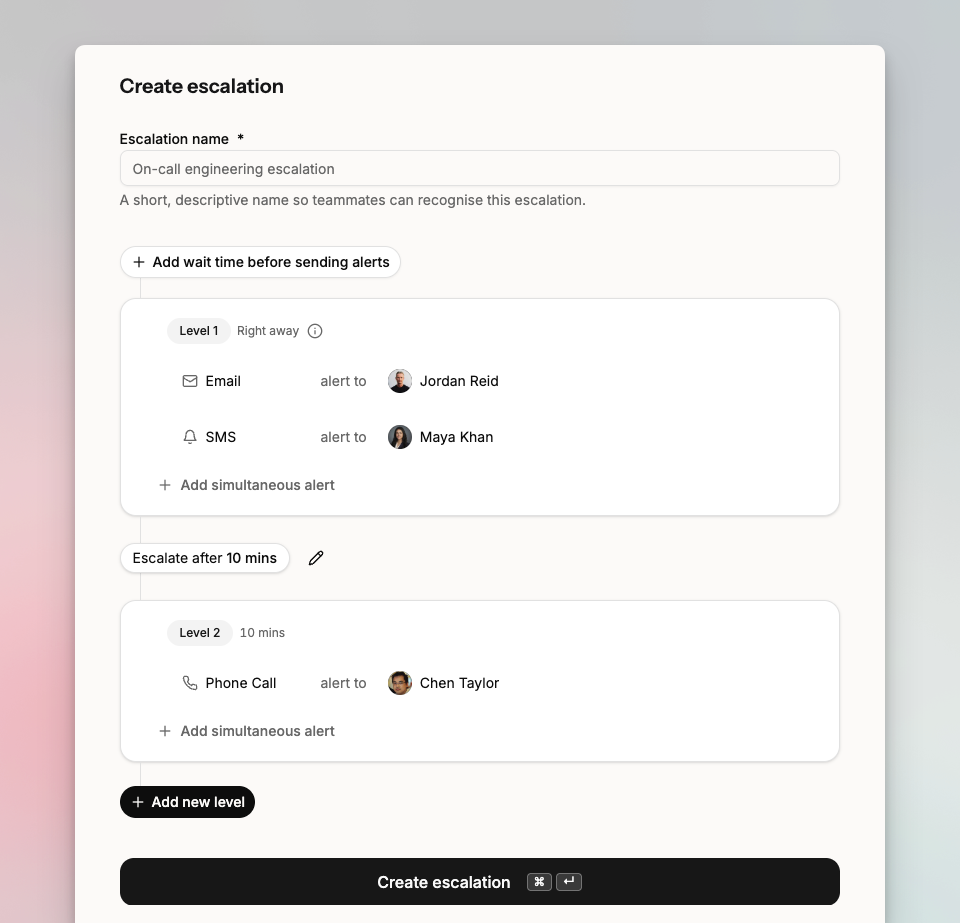
1. Give the policy a clear, identifiable name.
2. Add one or more escalation levels.
3. Set a timeout for each level. This is how long Spike waits before escalating to the next level if the incident isn't acknowledged or resolved.
An example escalation policy with two levels.
{% hint style="info" %}
Leave the time interval blank on the last escalation step.
{% endhint %}
{% endstep %}
{% step %}
### Save
Click **Save** to activate the policy.
{% endstep %}
{% endstepper %}
## Simultaneous alerts
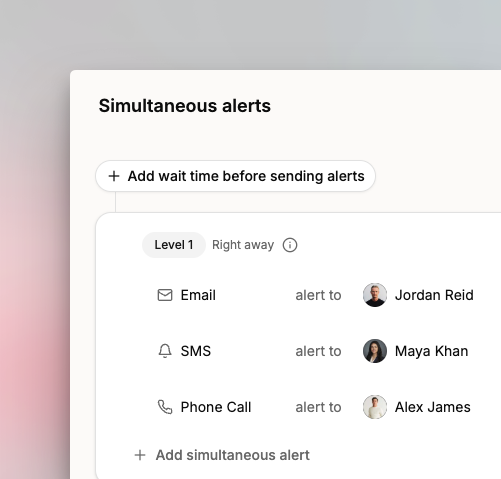
To alert multiple people or channels at the same time, add them as separate alerts within the same escalation level. Avoid creating a new escalation level with a 0-minute interval. This is not the same as simultaneous alerting.
Correct: multiple alerts within one escalation level.